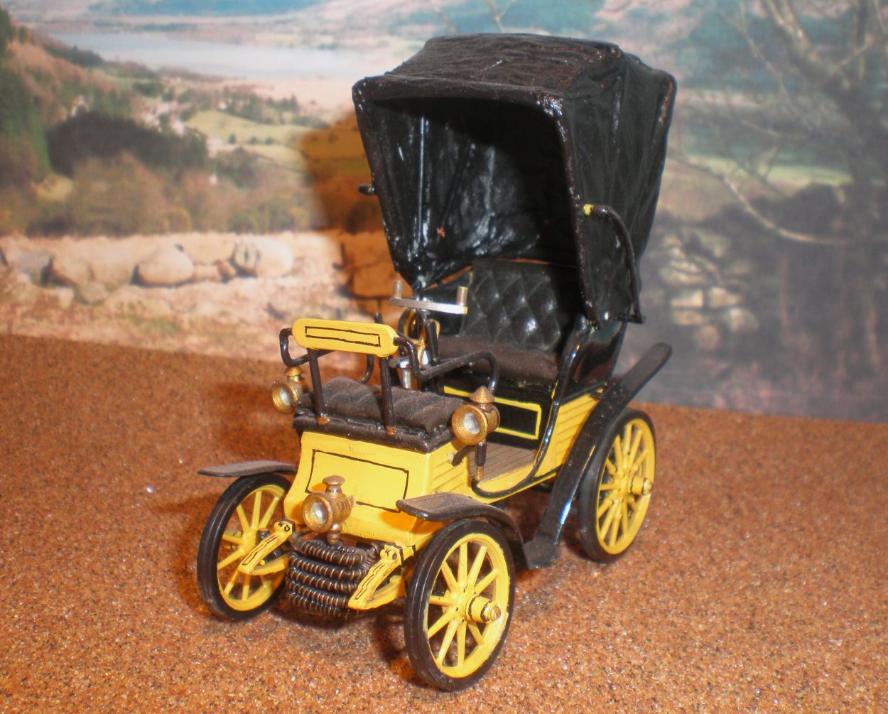
1899 F.I. A.T. 4hp
In 1899 it is claimed there were just 111 cars in Italy; approximately one car per 302.000 people. Giovanni Agnelli and brothers Giovanni, Ernesto and Matteo Ceirano, founded Fabbrica Italiana Automobili Torino, F.I.A.T., later Fiat for short, in 1899. As it happens, the Ceirano brothers were influential in several different Italian automotive firms starting up. Itala, SCAT (Societa Ceirano Automobili Torino), SPA (Societa Piemontese Automobilli), and of course Ceirano GB & C can all be linked with them. One might suggest they were the force that drove Italy into the automotive world.
“Italian Automobiles Factory, Turin” produced their first car in 1899, largely to the same design as the Ceirano brothers had produced. The Turin factory was originally designed for bicycle manufacturer by the 3 brothers under the banner of Welleyes bicycles. When they moved on Giovanni Agnelli purchased the plant, design and patents from them in July 1899.
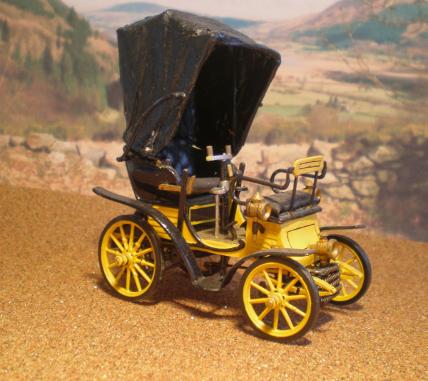
The Ceirano design was by Aristide Faccioli, the prototype Ceirano looking very much the same as the inaugural F.I.A.T. car put into production that same year. An unusual feature, at least to us in 2025, is the "Vis-a-Vis" or face to face seating configuration; something not unusual in the world of carriages. However, with the driver sitting on the rear seat facing forward his view was obstructed if passengers sat in front of them. The “Duc” bodywork was by Marcello Alessio of Turin giving space for up to four people. The Driver and three passengers. The rear seat box hid the rear mounted engine and held the large folding hood which protected the driver and rear seat passenger only. There was no steering wheel, despite this having been put into service a couple of years earlier in France and Germany, just a set of handles set upright on a cross member more reminiscent of bicycles than anything else.
The engine was an interesting side by side two-cylinder design laid horizontally in a manner we might call 'flat' today. It had a 'T' head combustion chamber with a compression ratio of 4:1 and inlet and exhaust valves which opposed each other. Ignition was electrical through an ignition coil and accumulator with water cooling via a finned tube radiator mounted low at the front of the vehicle. Two engine sizes are recorded. One as 679cc engine (65 x 99mm) and a larger 837cc version. Whether these were by option or simply evolution over time is unclear to us. The power rating of the engine is also recorded with multiple differences, either 3.5hp, 4hp or 4.2hp. This would be due to different engine capacities and the taxation systems of the time. The claimed output of 4.5hp at 800rpm must be the maximum ever achieved.
This engine was linked to a 3-speed (but no reverse) gearbox and transmitted power to the rear wheels through chain drive. A reported top speed of around 22mph, 35kph if you prefer, was attainable. Pretty good, all things considered. A fuel consumption of 35mpg is claimed, that's approximately 8Ltrs per 100km.
The FIAT 4hp was only in production through 1899 and 1900, at Corso Dante plant, Turin. In 1899 eight 4hp cars rolled out of the works. 18 more were produced through the next year before demand for newer more powerful models with 6, 10 and 12hp engines pushed the 4hp of the line.
Of the 24 4hp cars produced by FIAT at least four remain in existence. Two reside in Italy, at the Centro Historico Fiat at Turin. The others can be found in the famous National Motor Museum in Beaulieu, Hampshire United Kingdom. Or, at the Ford Museum in Dearborn, Michigan, USA.
S. A. Fabbrica Italiana di Automobili Torino grew to become one of the world's biggest automotive manufacturers. By 1901 FIAT models were being made available for export. In 1906 it was producing cars, trucks, trams, buses, marine and aviation engines; and racing cars. In 1908, FIAT was Europes' biggest taxi manufacturer and was now exporting cars to the United States. By 1910, FIAT was the largest manufacturer in Italy and moving toward the manufacturing of military equipment. In 1923 FIAT opened the Lingotto factory, then the largest facility in Europe with a system designed so the cars worked their way up the factory as production progressed before finally emerging out onto the roof top test track. Yes, that famous scene from 1982 “The Italian Job” film, is the test track of the Lingotto building. From Italian car industry pioneers to one of today's manufacturing juggernauts as the Fiat Chrysler Group. Having produced stylish Italian small cars from the original global icon that was the Fiat 500, and reprised that with the modern 500 Fiat continue to produce cars, trucks, planes, tractors, and an awful lot more; in over 100 countries all over the world.

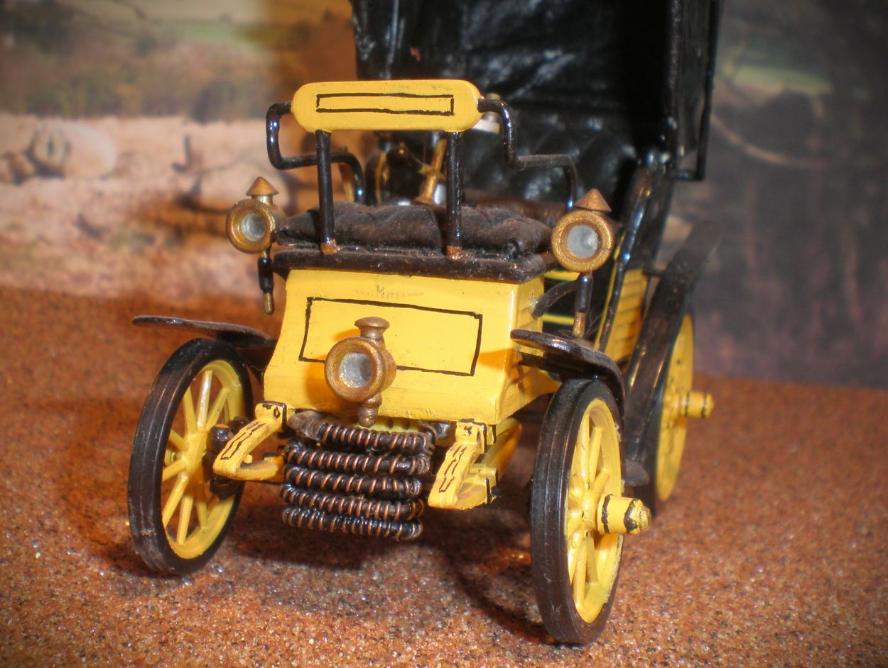
The kit
Prodetti Aviomodelli Cemona Italy advertised under the headline, “deLuxe kits for exacting modellers”, which may have been reasonably accurate in the late 1950s. In 1961 they were producing powered flying aircraft kits as well as plastic kits. Which came first I am yet to discover.
For us in the UK it is a little known brand, although their kits do come up from time to time on auction web sites, second hand sellers sites and at model shows. Prices vary quite widely. Mostly the models are from the static aircraft range with cars generally demanding much higher prices.
After their closing, all parts in stock was bought by mantua model group. Another major Italian manufacturer “Mantua Models” have produced wooden ship and aircraft models for many decades. Their ship kits are particularly well detailed and in larger scales than some others. Mantua have always set high standards and use innovative production techniques in production. They were the first ship model company to introduce laser cutting technology. The name of Mantua Model is so well known in the world of model ship building it is an equal in terms to Airfix being the name for plastic kits regardless of the actual kit manufacturer. Mantua's expansion into flying models began with the takeover of Aviomodelli. The rest of their range of plastic kits range really just came along for the ride.
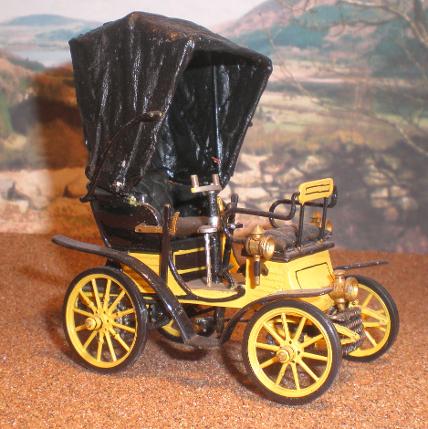
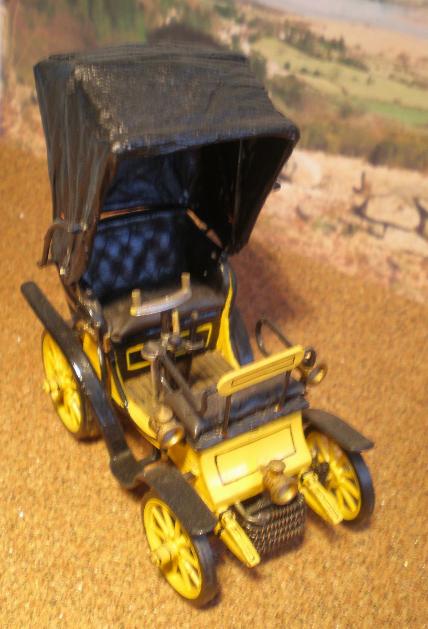
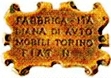
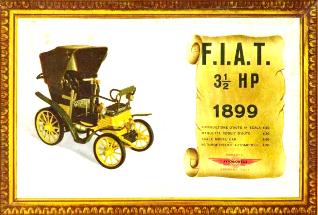
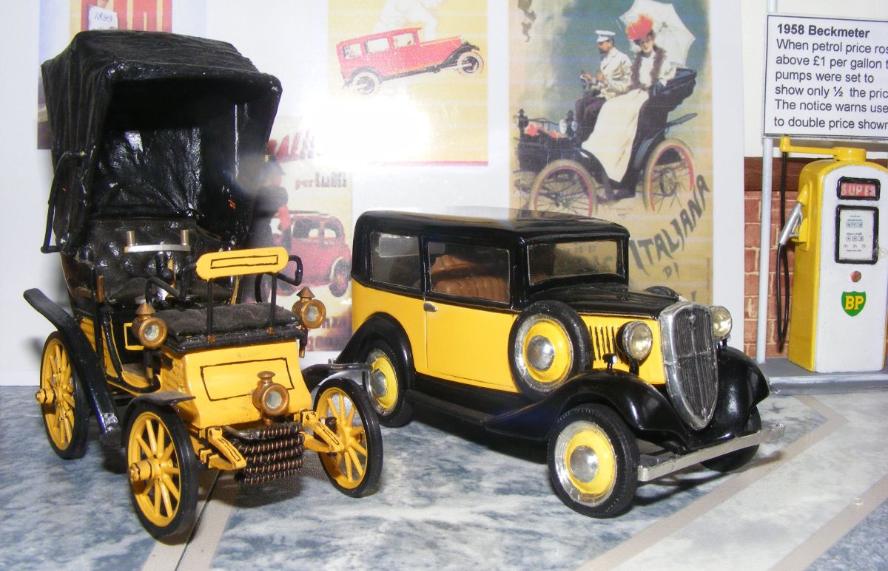
Aviomodelli released this 1/32nd scale 1899 F.I.A.T 3.5hp kit in the late 1950s to early 1960s; the exact year unknown to us. The same kit was also released under the banners of TROL (who's logo is very much like the old Hawk logo), and Montaggio Macchina Shell, who released the 1907 ITALA model we have in the collection.
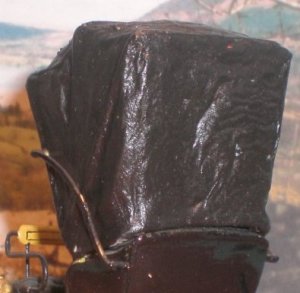
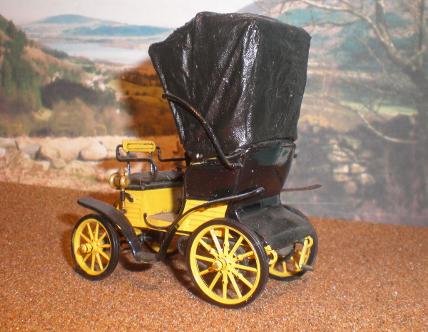
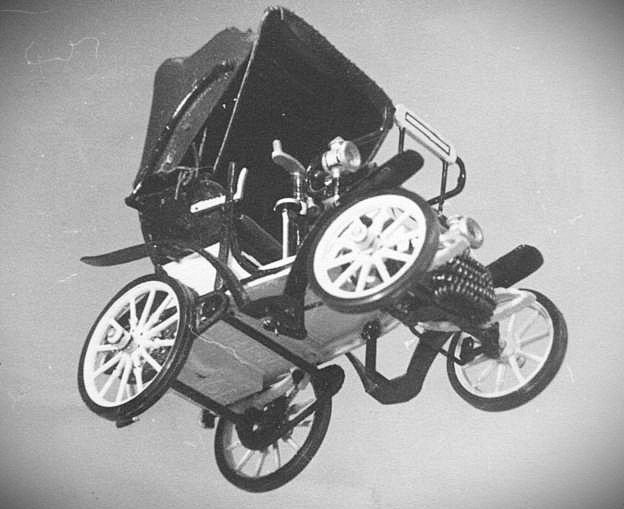
This kit was purchased by Rod on a trip abroad and built in the mid 1960's. It has been detailed in various ways most notably the scratch built front mounted tube radiator and the cloth hood. Originally Rod made a hand sewn leatherette hood for this model, but it degraded over the years and was removed in the 2000s to be replaced with a doped tissue hood. All painting is by brush, applying Humbrol enamels throughout.